Cephalometry is one of the essential diagnostic workflows in orthodontics and maxillofacial treatment planning. From a lateral skull radiograph, the clinician identifies specific anatomical landmarks to evaluate skeletal, dental, and soft tissue relationships. It is a critical diagnostic task, but also a repetitive, meticulous, and demanding one: every point must be placed precisely because measurements, angles, interpretations, and clinical decisions depend on it.
From Tracing Paper to Native Digital Cephalometry
For decades, this process was analog. The orthodontist placed tracing paper over the radiograph, marked anatomical references one by one, and manually drew planes, contours, and structures. It was a technical, almost handcrafted gesture that required anatomical knowledge, patience, and a very careful reading of the image.
With OrthoKit, that tracing workflow moves into a digital environment while preserving the same clinical logic: first landmarking, then anatomical construction. The user places cephalometric points on the radiograph and OrthoKit generates the corresponding structures, lines, curves, planes, and measurements. On macOS, the tracing is built with native technologies such as AppKit, Swift, and NSBezierPath, allowing anatomical contours to be represented with vector precision. On iPadOS and iOS, SwiftUI provides a fluid, direct, touch-first experience adapted to clinical work.
OrthoKit’s technical foundation is fully native. It is not a web layer inside an app or a repurposed generic solution: it is a clinical tool developed with Swift, SwiftUI, AppKit, Core ML, and Metal, optimized for Apple Silicon and modern Apple devices. That decision makes the tracing feel immediate, keeps interaction precise, and protects patient privacy.
AI-Assisted Tracing
IA-Assisted Ceph adds a new layer to this workflow: intelligent assistance for cephalometric tracing. OrthoKit uses a machine learning pipeline specifically trained to detect anatomical landmarks in lateral skull radiographs. Instead of replacing the clinician, the system accelerates the most repetitive part of the process: it proposes a complete tracing in approximately 2-3 seconds and leaves the professional in full control to review, adjust, and validate every point.
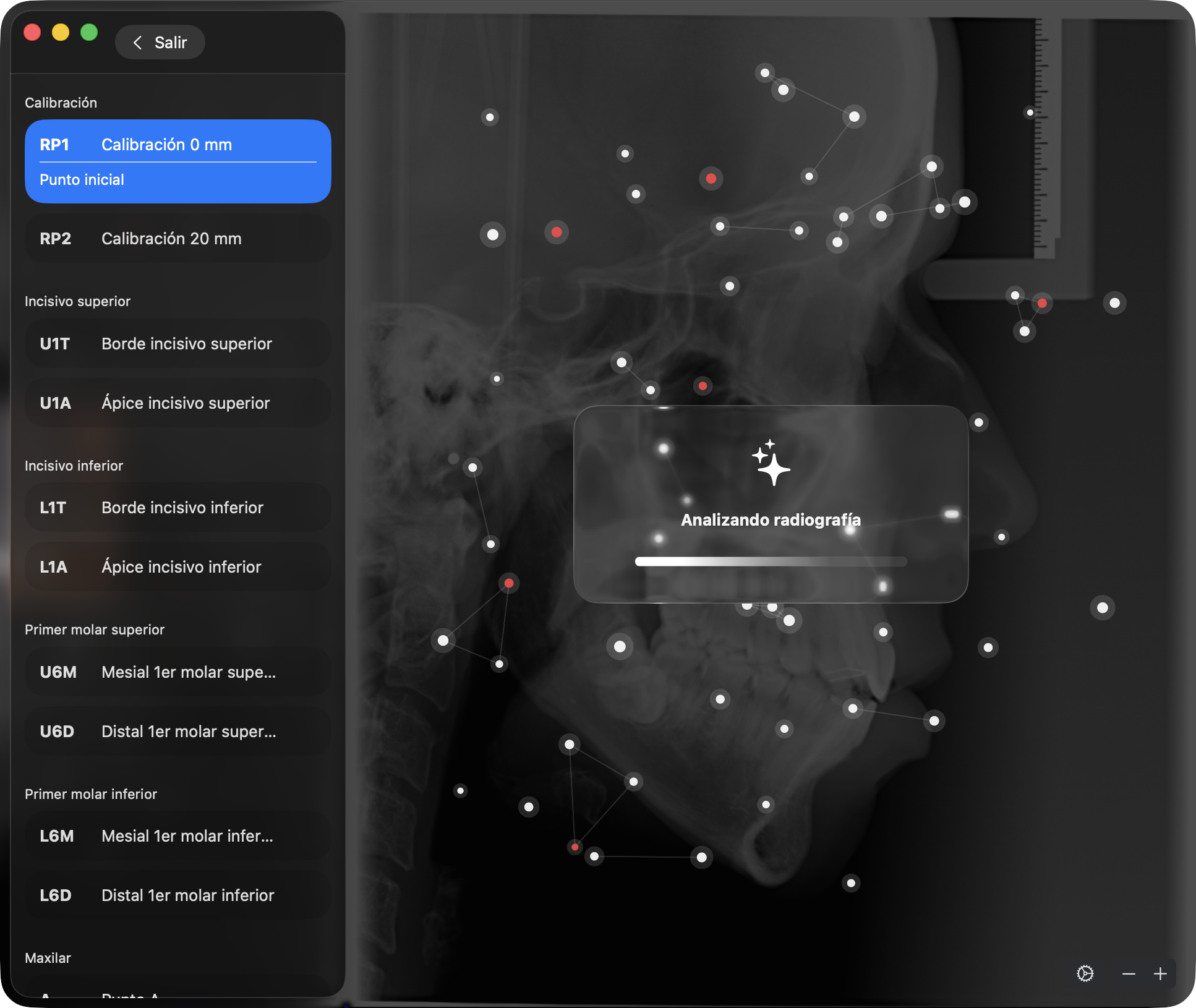
The model is optimized and quantized to run locally with Core ML and Metal. There is no upload of radiographs to external servers, no cloud processing, and no compromise to the confidentiality of the clinical workflow. All radiographic data remains on the user’s device.
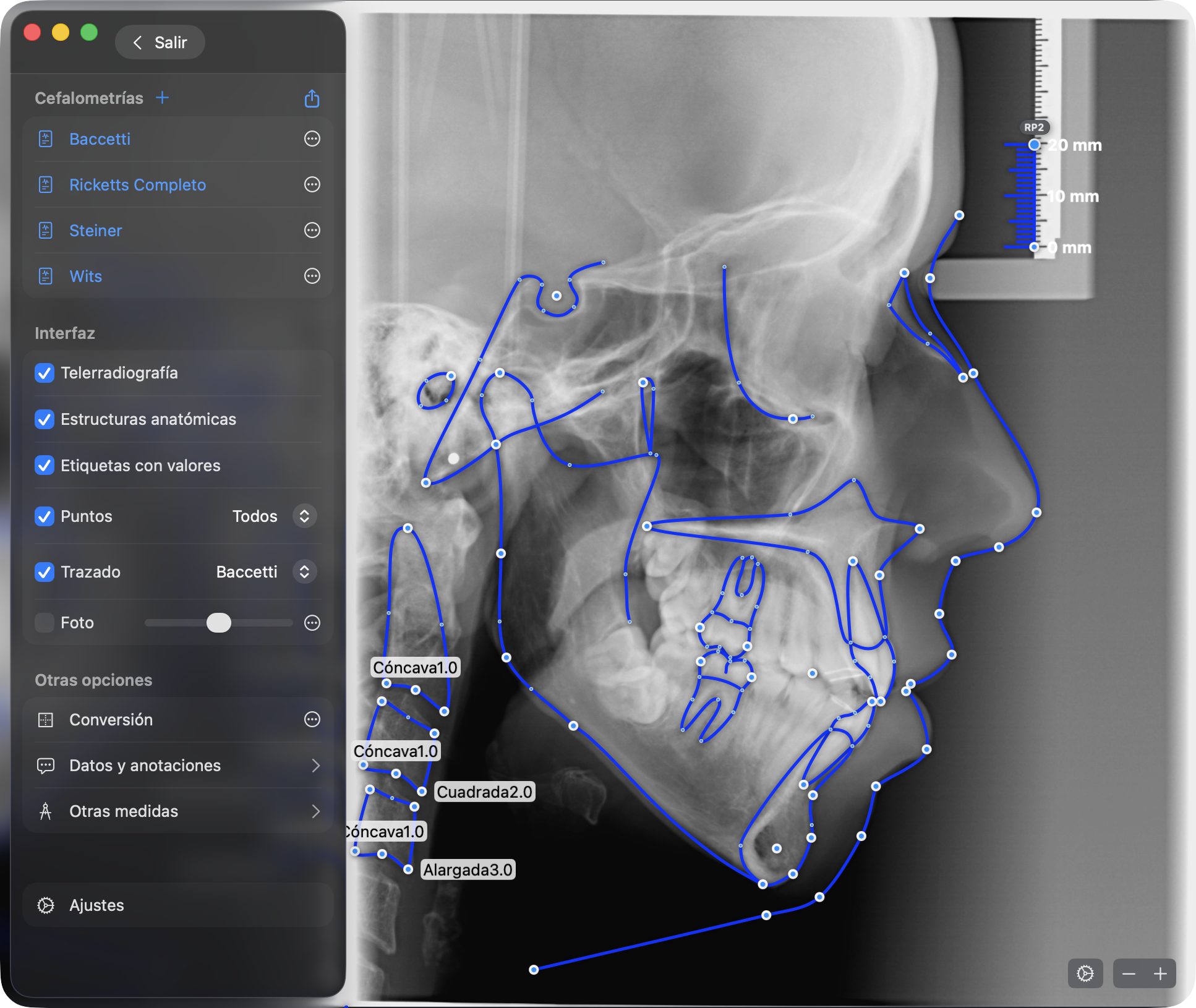
Clinical Precision, Local Privacy
The result is a natural evolution of cephalometry: from tracing paper to native digital tracing, and from manual point-by-point work to an AI-assisted experience that preserves clinical responsibility. OrthoKit does not try to turn diagnosis into a black box. Its goal is to reduce friction, save time, and let the orthodontist focus more attention on what truly matters: interpreting the case, planning treatment, and making decisions with clinical judgment.
IA-Assisted Ceph represents the combination of clinical precision, native engineering, and local privacy that defines OrthoKit’s work in the Apple ecosystem.